Download brochure
Three PGPSM students collaborating around a laptop in a bright co-working space

Build your career
at the speed of
a startup

An 11-month, full-time programme designed to prepare you for successful careers in startups

  • Founder-led
    sessions

  • AI-first
    ways of working

  • Learning
    by building

  • Placement
    in a startup

11Months

Full-time programme

4Months

Startup residency

1,000+

Startup hiring partners annually

₹9.9Lakh

Programme fee

Application Deadlines

31 Dec 2026

Early action

31 Jan 2027

Regular admissions

Programme Starts

August 2027

Early action advantages  •  Priority hostel allocation  •  Exclusive scholarships  •  Early offers

CAREER OUTCOMES

Start your
career here

  • Build products
  • Work alongside founders
  • Find markets
  • Create brands
  • Crack growth
  • Scale businesses
Product management team reviewing prototypes

Product Management

Working directly in a founder's office

Founder's Office

Strategy planning with a chessboard metaphor

Strategy

Growth dashboard on a laptop screen

Growth & Marketing

Business operations in a warehouse

Business Operations

Sales and business development handshake

Sales & Business Development

Customer success representative on a headset

Customer Success

AI and automation robotics interface

AI & Automation

Hiring Partners

Meritto DronaPay Board Infinity Eamot Shunya Univariety Logy AI

Curriculum & Pedagogy

11 months designed to get you startup-ready

A hands-on journey that takes you from learning the fundamentals to working inside a startup and launching your career

01

6 Months

At SPJIMR

Learn startup management. Build as you learn.

Learn from practitioners, the management foundations to understand, build and grow startups

What you'll learn

  • Startup thinking
  • Problem discovery
  • Product build & experimentation
  • Technology, data & intelligent systems
  • Go-to-market, sales & distribution
  • Venture economics & financial strategy

Build Lab

Build real products, test them with real users and iterate based on market feedback

Milestone —
Startup Residency Placement Get placed with a startup for a 4-month residency
02

4 Months

Startup Residency

Student working alongside a startup team on live projects

Work full-time inside a startup

Work on real startup challenges

Take ownership and make decisions

Learn alongside founders & operators

Find your startup-career fit

Apply what you learnt at SPJIMR in a real operating environment.

Milestone —
Opportunity for a Pre-Placement Offer Students and startups evaluate mutual fit during the residency.
Two PGPSM alumni shaking hands in a modern office corridor
03

1 Month

At SPJIMR

Launch your startup career

500+

hours of classroom learning

200+

hours of building

150+

hours of industry interaction

50+

academic credits

STARTUP CAREER ECOSYSTEM

1,000+
Startups

Across india. Across sectors. Across stages.

A startup network that opens doors from learning to placements

Your classroom just got bigger

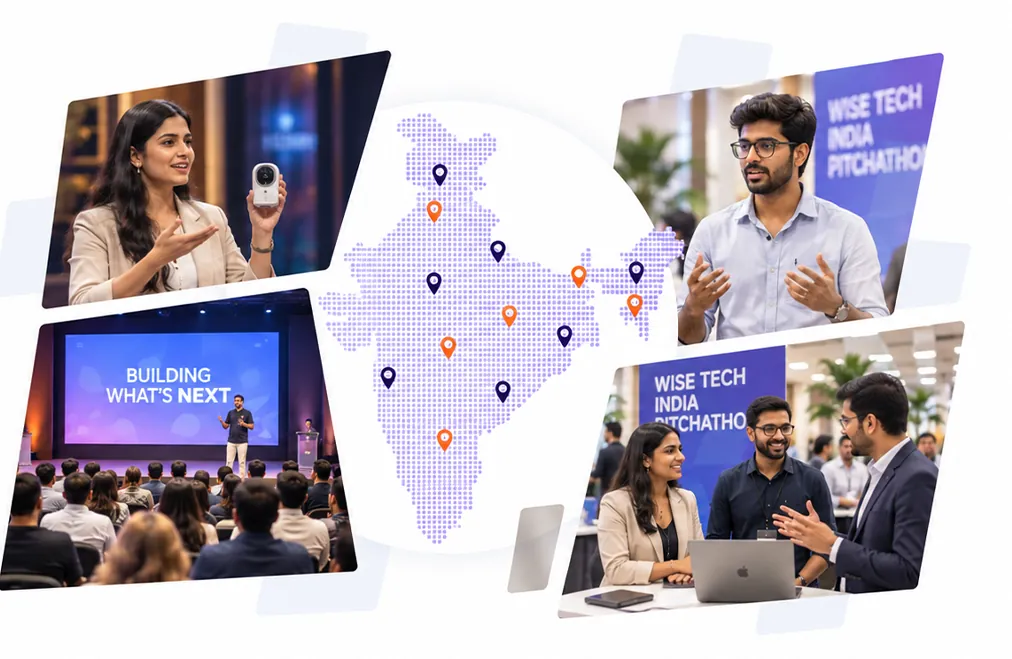
Collage of WISE Tech India Pitchathon events and a dotted map of India marking startup locations

Questions?

Key FAQs

Everything you need to know about PGPSM, in one place

About the Programme11 questions

PGPSM is a 11-month postgraduate management programme purpose-built for careers in startups and the startup ecosystem. Its curriculum, courses and learning experiences are uniquely designed to prepare students to excel in startups and high-growth businesses. Students learn management in the context in which startups operate, combining classroom learning with venture building, real startup exposure and direct learning from founders, investors and practitioners.

PGPSM is designed for ambitious graduates who see their future in the startup sector, whether they want to build careers in high-growth startups, launch ventures of their own, or work across the broader startup ecosystem.

PGPSM is a specialised postgraduate management programme designed specifically for careers in startups and the startup ecosystem. Startups operate with greater uncertainty, fewer resources and rapidly evolving markets, requiring a distinct set of skills and ways of thinking. While traditional management programmes typically provide broad-based management education across industries and established businesses, PGPSM tailors its curriculum, courses and learning experiences to the unique challenges of building, managing and growing startups. Students learn management in a startup context, with a strong emphasis on venture building, real startup projects and direct engagement with founders, investors and practitioners.

No. PGPSM is a specialised Post Graduate Programme in Startup Management, purpose-built for careers in startups and the broader startup ecosystem. Unlike a general MBA, it focuses its curriculum and learning experiences specifically on the skills and capabilities required to build, manage and grow startups and high-growth businesses.

PGPSM is a specialised Post Graduate Programme in Startup Management offered by SPJIMR. It is not an AICTE-approved PGDM or MBA programme.

Participants who successfully complete the programme will receive a Post Graduate Programme in Startup Management certificate from SPJIMR.

PGPSM is an 11-month, full-time programme structured across three phases: six months of classroom and experiential learning, followed by a four-month startup internship, and a final one month back on campus to consolidate learning and prepare for careers in the startup sector.

SPJIMR WISE Tech is the institute's startup and innovation ecosystem, bringing together startups, founders, mentors, investors and ecosystem partners. Its initiatives engage with 1,000+ startups annually, supported by 40+ mentors, 30+ investors and a growing network of ecosystem partners.

PGPSM is embedded within this ecosystem, giving students direct access to real startups and the people building and funding them. Students get opportunities to work on real startup challenges, learn directly from founders and practitioners, engage with mentors and investors, and participate in venture-building and ecosystem activities, bringing the startup world directly into their learning experience.

PGPSM students become part of a thriving entrepreneurial community built around SPJIMR WISE Tech. Through initiatives such as the WISE Tech India Pitchathon, which engages 1,000+ startups annually from across India, and its accelerator programmes, students are continuously exposed to founders building businesses across sectors and stages. This creates opportunities to engage with startups, participate in startup events and venture-building activities, and build relationships across the ecosystem. At PGPSM, the startup community itself becomes an extension of the classroom.

Yes. PGPSM students benefit from SPJIMR's and WISE Tech's extensive alumni network, and founder network, creating opportunities for mentorship, industry insights, career conversations and professional connections.

PGPSM students will have opportunities to work with a curated selection of the 1,000+ startups that enter the WISE Tech ecosystem annually. These ventures span sectors such as AI, DeepTech, FinTech, HealthTech, Climate Tech, electric mobility, Agritech, consumer and enterprise technology, and range from early-stage startups validating their ideas to ventures preparing to scale. This gives students exposure to diverse business models, sectors and stages of the startup journey.

Is PGPSM Right for Me?10 questions

If you are excited by a career where you can take ownership early, shoulder real responsibility, learn rapidly and contribute directly to building and growing a business, PGPSM would be the right fit for you. It is designed for graduates who are curious, ambitious, comfortable learning by doing, and want to build careers in startups, high-growth businesses or the wider startup ecosystem.

No. PGPSM is designed to prepare students for careers in startups and high-growth businesses. The same skills — understanding customers, building products, developing business models, driving growth and working with limited resources — also provide a strong foundation for students who may choose to become founders. Those pursuing a founder journey additionally benefit from the WISE Tech ecosystem and its network of founders, mentors, investors, incubators and ecosystem partners across India.

Absolutely. Building careers in startups and high-growth businesses is at the heart of PGPSM. The programme prepares students with the distinct management skills and ways of thinking required to operate in environments characterised by uncertainty, limited resources and rapidly evolving markets. Through a startup-focused curriculum, real startup projects, venture-building experiences and a four-month startup internship, students learn how to understand customers, build products, develop business models, drive growth and make decisions in the context in which startups actually operate.

Absolutely. In the startup world, attitude and ambition can matter as much as prior experience. PGPSM is designed for graduates who are curious, ambitious and willing to learn; who take initiative and ownership; and who are ready to roll up their sleeves and get things done. A high-agency, high-energy mindset and the ability to learn rapidly are often what enable people to thrive in startups. These are also qualities we look for during the PGPSM selection process, so applicants should be prepared to demonstrate them through their experiences, choices and actions during the interview.

Yes. PGPSM welcomes graduates from diverse academic backgrounds. Startups are inherently interdisciplinary, and succeeding in them requires the ability to connect the dots across customers, technology, products, marketing, sales, finance, operations and growth. You do not need an engineering degree or prior coding experience; what matters more is your curiosity and willingness to learn beyond your discipline.

Whether you come from engineering, commerce, science or the arts, the programme will help you develop capabilities beyond your existing area of expertise. Students without a technology background will learn how technology is used to create products and businesses, including leveraging AI and emerging tools to prototype, build and solve problems — without being expected to enter the programme with programming skills. Equally, students with engineering or technology backgrounds will learn to understand customers, design great products, sell, build brands, manage finances and grow businesses.

Working at a startup can be a great way to learn. But your learning is often shaped by the role you happen to get, the company you join and the problems you happen to encounter. You learn through experience, mistakes and trial and error — and it can take years before you begin to connect the dots and understand why some decisions work and others don't.

PGPSM is designed to compress that learning curve. Instead of discovering each piece in isolation, you develop a holistic understanding of how startups actually work — from customers, products and technology to sales, marketing, finance, operations and growth. You learn the concepts and frameworks behind these decisions, and then apply them through real startup experiences.

That foundation can change the trajectory of your early career. You enter the startup world better equipped to understand what is happening around you, contribute beyond your immediate role, make better decisions and learn faster from every subsequent experience. If you want to accelerate your growth in the startup sector rather than leave it entirely to experience and time, that is the advantage PGPSM is designed to give you.

You may, especially if you want to develop the mindset, understanding and skills required to build and lead a high-growth business. PGPSM will teach you a disciplined approach to understanding customers, designing products, building business models, acquiring customers, managing resources and navigating growth. You can apply these learnings to test and develop your own idea, and the capabilities you build can help you become a more effective founder.

However, PGPSM is a rigorous, full-time management programme, not an incubator built around developing individual student ventures. Students are expected to participate fully in the entire learning journey, including courses, projects, team-based experiences and the startup internship, as every component is integral to the programme. Your startup idea does not replace any part of the programme's learning journey. If you choose to pursue it alongside the programme, the initiative, ownership and additional time commitment required to build the venture remain with you.

PGPSM is a rigorous, full-time programme and may not be suitable if you are already running a startup that requires your active day-to-day involvement. The programme requires students to commit fully to classes, projects, team-based learning, startup engagements and the four-month internship.

If you already have a venture and still wish to apply, you should be able to demonstrate during the admissions process that you can meet the full demands of the programme while managing your responsibilities as a founder. Having a startup does not reduce or replace any of the academic or experiential requirements of PGPSM, nor does it automatically give you an advantage in the admissions process. Applicants are evaluated on their overall fit with the programme, including their ambition, attitude, learning orientation and ability to commit fully to the PGPSM experience.

PGPSM will equip you with the frameworks, skills and mindset to systematically test, build and grow your venture, but the ownership and responsibility for building it remain with you. Students pursuing promising ventures may have opportunities to access the wider WISE Tech ecosystem, including its network of mentors, incubators, investors and ecosystem partners.

Funding or incubation is not guaranteed as part of PGPSM. Ventures would need to qualify through the relevant selection processes and meet the same standards expected of other startups seeking such opportunities.

That is perfectly fine. PGPSM is not built around a single career outcome of becoming a founder. It is designed to help you understand how startups are built, managed and grown, and develop the capabilities to contribute meaningfully to that journey.

The same understanding that makes you a better founder also makes you a more effective startup professional. Knowing how customers are discovered, products are built, markets are created, revenues are generated, resources are managed and businesses are scaled helps you see beyond a single function and understand the business as a whole.

PGPSM also gives you significant exposure to the realities of startup life, allowing you to discover where you fit best. You may decide to build your own venture, join an ambitious startup and help scale it, or pursue another role in the startup ecosystem. The objective is not to turn everyone into a founder; it is to prepare you to build a meaningful career in the startup sector.

Eligibility Criteria & Fitment12 questions

Applicants must hold a bachelor's degree in any discipline with a minimum of 50% aggregate marks (or equivalent CGPA). Students from all academic backgrounds are welcome to apply. Final-year undergraduate students may also apply, subject to completing their degree and meeting the programme's eligibility requirements before joining.

No. You do not need a startup idea to join PGPSM, nor are you expected to start a company during the programme. PGPSM is primarily designed to prepare you for careers in startups and high-growth businesses.

What matters far more is whether you have the mindset to thrive in the startup world — curiosity and ambition, a willingness to learn rapidly, the initiative to take ownership, and the readiness to roll up your sleeves and get things done. Through PGPSM, you will learn how startups are built, managed and grown, work with real startups, and develop capabilities across customers, products, technology, sales, marketing, finance, operations and growth.

Along the way, you may discover a problem worth solving and decide to build a venture of your own. But having an idea, or becoming a founder, is not the measure of entrepreneurial potential at PGPSM. We look for high-agency individuals who want to build, contribute and create impact in the startup world, whether as startup professionals or eventually as founders.

Yes. Students in the final year of their undergraduate degree are eligible to apply to PGPSM. Any offer of admission will be subject to successful completion of their bachelor's degree and meeting the programme's academic eligibility requirements within the stipulated timelines.

No. Prior work experience is not required, and PGPSM welcomes both fresh graduates and candidates with professional experience. Prior experience can certainly be valuable — it gives you real-world context, exposure to organisations and situations to draw upon, and can enrich how you engage with the programme.

But experience is not the only way to demonstrate your potential to succeed in the startup world. For fresh graduates, we look for curiosity, ambition, initiative, willingness to take ownership, the ability to learn rapidly and a readiness to roll up your sleeves and get things done. A high-agency, high-energy individual with the right attitude can thrive in PGPSM even without prior professional experience.

No. PGPSM is a rigorous, full-time programme and requires 100% commitment from students. The learning experience extends well beyond classroom sessions to projects, team-based work, startup engagements, experiential activities and the four-month startup internship.

Students should join PGPSM only if they are prepared to make the programme their primary academic and professional commitment for the full 11 months. It is not designed to be pursued alongside a full-time job, another academic programme or other significant professional commitments.

The PGPSM admission process is designed to identify candidates who have both the academic and analytical ability to handle the rigour of the programme and the mindset to thrive in the startup world.

Each stage helps us understand a different dimension of the candidate. CAT/GMAT/GRE helps assess analytical aptitude and readiness for rigorous postgraduate coursework. The Statement of Purpose (SOP) helps us understand your motivation, ambitions and why you want to build a career in the startup sector. The screening interview is an initial assessment of your motivation, experiences and fit with PGPSM. The personal interview goes deeper into the person behind the application — your curiosity and hunger to learn, the energy and ambition you bring, your willingness to take ownership, and whether you have the high-agency mindset to roll up your sleeves, solve problems and make things happen.

Ultimately, we are looking for students who combine intellectual ability with curiosity, ambition, energy and a strong learning orientation. You do not need prior work experience or a startup of your own. What matters is whether your experiences, choices and actions demonstrate that you can learn rapidly, take responsibility and make the most of the opportunities PGPSM and the startup environment will place in front of you.

No. You do not need a technology background or prior coding experience to join PGPSM. You will, however, be expected to become comfortable understanding and using technology as part of building businesses. The programme will help you understand how technology and products are built and how AI and emerging tools can be used to prototype, build and solve problems, without expecting you to enter as a programmer.

No. You are not expected to enter PGPSM already knowing how businesses or startups work. The programme is designed to build these foundations systematically, from understanding customers and products to marketing, sales, finance, operations and growth. What we do expect is curiosity, a strong willingness to learn and the readiness to engage with areas that may be completely new to you.

Prior exposure to business or entrepreneurship can certainly be helpful and may give you familiarity with some of the concepts covered in the programme. However, it does not provide an automatic advantage in admission or determine how well you will perform in PGPSM.

We look for candidates from diverse academic backgrounds who combine academic and analytical ability with curiosity, ambition, a strong willingness to learn and a high-agency mindset. What you have studied matters less than what you have made of your experiences and your readiness to learn beyond your existing discipline.

Yes. International students may apply to PGPSM, subject to meeting the programme's eligibility criteria and applicable admission, documentation and visa requirements. International applicants should note that their ability to undertake the programme's startup internship and subsequently work in India will be subject to the visa, immigration and employment regulations applicable to them.

Applicants are therefore advised to independently confirm the relevant visa and work-eligibility requirements before joining the programme.

Yes. Applicants are required to submit a valid CAT or GMAT or GRE score as part of the selection process. The score helps us assess the analytical and quantitative aptitude required to manage the academic rigour of PGPSM and forms one part of the overall evaluation, alongside the SOP, screening interview and personal interview.

Applicants who do not have a valid CAT or GMAT or GRE score may instead take an aptitude test conducted by SPJIMR. However, CAT or GMAT or GRE scores are preferred and applicants submitting these scores will be given preference in the selection process. Applicants taking the SPJIMR aptitude test route may also be required to attend an additional interview.

PGPSM is designed for a focused cohort of approximately 30–50 students. The intentionally limited cohort size enables highly interactive learning, closer engagement with faculty, founders and practitioners, and meaningful participation in team-based projects, startup engagements and experiential learning.

Admissions4 questions

Applicants are required to submit a valid CAT or GMAT or GRE score as part of the application process. The score helps us assess the analytical and quantitative aptitude required to manage the academic rigour of PGPSM and forms one part of the overall evaluation, alongside the SOP, screening interview and personal interview.

Applicants who do not have a valid CAT or GMAT or GRE score may instead take an aptitude test conducted by SPJIMR. However, CAT or GMAT or GRE scores are preferred and applicants submitting these scores will be given preference in the selection process. Applicants taking the SPJIMR aptitude test route may also be required to attend an additional interview.

The PGPSM interview is not intended to test prior startup knowledge. It is designed to understand how you think, your motivation for pursuing a career in the startup sector, and the energy, curiosity and learning orientation you bring. We look for evidence of initiative, ownership and a high-agency mindset through your experiences, choices and actions. You should be prepared to discuss what you have done, what you have learned and why PGPSM is the right next step for you.

Applications for the PGPSM 2027 cohort open in the second week of September 2026 and close on 31 December 2026, for the “Early Action” admissions cycle, and on 31 January 2027, for the Regular admissions cycle.

Applicants will need to submit academic records, identification documents and other information specified in the application form.

Curriculum & Learning Journey14 questions

PGPSM is designed as an 11-month journey that moves between learning and application. Students begin with six months of intensive classroom and experiential learning, building strong foundations across customers, products, technology, AI, marketing, sales, finance, operations and growth, while applying these concepts through projects and engagement with real startups.

This is followed by a four-month startup internship, where students work inside a startup and experience first-hand the pace, ambiguity, ownership and cross-functional nature of building and growing a business. They then return to campus for the final one month, bringing their startup experience back into the classroom to reflect, connect theory with practice, deepen their learning and prepare for their next career step.

Throughout the 11 months, classroom learning is complemented by real startup projects, founder and practitioner-led sessions, and continuous exposure to the WISE Tech startup ecosystem. The journey is deliberately designed so that students learn, apply, experience and return to learn again, each time with a deeper understanding of how startups actually work.

PGPSM covers the full spectrum of management capabilities required to build, manage and grow startups and high-growth businesses. The curriculum spans customer discovery and market understanding, product management, technology and AI, marketing and brand building, sales and go-to-market, finance and unit economics, operations, strategy, business models, venture growth and fundraising.

Importantly, these are not taught as isolated management subjects. The curriculum is designed around how these disciplines come together in a startup — helping students understand the connections between what customers need, what products to build, how technology enables them, how to acquire and retain customers, how the business makes money, and how it ultimately grows and scales.

PGPSM is designed to integrate classroom learning with application throughout the 11 months, rather than separate theory from practice. The first six months combine management concepts and frameworks with real startup projects, venture-building exercises, founder and practitioner-led sessions, and engagement with startups from the WISE Tech ecosystem.

Students then spend four months working full-time in a startup internship, applying their learning in a live business environment. They return to the classroom for the final one month, where their real-world experience becomes an important context for deeper learning, reflection and career preparation.

So while eight months are campus-based and four months are spent in a startup, experiential learning runs through the entire programme. The objective is to learn the fundamentals, apply them to real problems, experience them in a startup, and then return with the context to understand them at a deeper level.

PGPSM projects are designed around real startup problems. Students may work with startups on challenges such as understanding customers, validating markets, designing and testing products, developing go-to-market strategies, building brands, improving sales, analysing business models and unit economics, or identifying opportunities for growth.

The nature of the projects will vary depending on the startup, its stage and the problem being addressed. The objective is to put students in situations where there may not be a predefined answer, requiring them to understand the problem, work with founders and customers, apply what they are learning and develop practical recommendations or solutions.

Yes. Engagement with practitioners is an integral part of the PGPSM learning experience, not limited to occasional guest lectures. Founders, investors, startup leaders and domain experts will contribute through classroom sessions, projects, mentoring, startup events and other ecosystem engagements.

Being part of SPJIMR WISE Tech also gives students access to an active startup ecosystem that engages with 1,000+ startups annually, along with mentors, investors and ecosystem partners. This enables students to learn not only from faculty and frameworks, but from people actively building, funding and scaling businesses.

Yes. AI is integrated into the PGPSM learning experience as a tool for building, working and solving problems in startups. Students will learn how to use AI to research and understand markets and customers, analyse information, develop and test ideas, create prototypes, automate workflows and solve business problems.

The objective is not to turn students into AI specialists, but to make them comfortable and capable of using AI and emerging technologies as part of how they build products, make decisions and get work done in a modern startup environment.

PGPSM is a full-time, on-campus programme, with classes primarily held at SPJIMR's Mumbai campus. Learning will also extend beyond the campus through startup projects, ecosystem engagements, events and the four-month startup internship.

That is perfectly fine. You do not need to have your startup career mapped out before joining PGPSM. The programme exposes you to the different dimensions of building and growing a startup, from customers, product and technology to marketing, sales, finance, operations and growth, helping you understand both how these functions work and how they connect.

Through projects, interactions with founders and startup professionals, and the four-month startup internship, you will also experience the realities of different roles and working environments. This breadth of learning and exposure can help you discover where your strengths and interests lie and make a more informed choice about the startup roles and career paths that are right for you.

PGPSM is designed to be an intensive and academically rigorous full-time programme. During the first six months, a typical weekday comprises five learning sessions — three classroom sessions focused on concepts, frameworks and discussion, followed by two build/lab sessions where students apply their learning through projects, problem-solving and hands-on work.

Weekends may include sessions with founders, investors, practitioners and other experts from the startup ecosystem. Students should also expect preparation, assignments, team projects and independent work outside scheduled sessions.

The pace is deliberately demanding. The learn-and-build rhythm requires students to continuously move between understanding concepts and applying them, developing both strong management foundations and the ability to learn rapidly, take ownership and get things done. Students should come prepared to commit fully and make the most of an intensive 11-month experience.

Yes, building is an integral part of the PGPSM learning experience. Through the programme's build/lab sessions and projects, students will move beyond analysing businesses to actually identifying problems, understanding users, developing solutions, creating prototypes and testing them with potential customers.

Students will also learn to use AI and emerging tools to build and experiment rapidly, including creating prototypes and technology-enabled solutions without necessarily having a prior coding background. Depending on the project, some solutions may progress towards pilots or market launch.

The emphasis, however, is not simply on launching something for the sake of it. It is on learning the disciplined process of moving from problem, to customer insight, to solution, to prototype, to validation, to iteration — and understanding what it takes to turn an idea into a product that customers actually value.

Both. PGPSM combines individual work with extensive team-based learning and projects. Startups are inherently collaborative and cross-functional, so students will frequently work in teams to solve problems, build products and work on startup challenges.

Teams may bring together students with different academic backgrounds, perspectives and strengths, requiring you to contribute your own expertise while learning to work across disciplines, resolve differences, take ownership and deliver collectively. At the same time, individual assignments and assessments ensure that every student develops the knowledge, judgement and capabilities expected from the programme.

PGPSM evaluates students on both their understanding of management concepts and their ability to apply them in real-world contexts. Assessment may include individual assignments and examinations, team projects, presentations, build/lab work, class participation and application-based work on startup problems.

Given the experiential nature of the programme, students will be expected not only to understand concepts and frameworks, but also to demonstrate that they can use them to analyse problems, make decisions, build solutions and deliver outcomes.

PGPSM is designed to be a rigorous and demanding full-time postgraduate management programme. Students should expect a fast-paced learning environment that combines academic coursework with build/lab work, team projects, startup engagements, independent preparation and a four-month startup internship.

The programme requires 100% commitment. Students will need to manage multiple priorities, work effectively in teams, meet demanding academic and project expectations, and take ownership of their learning. This intensity is deliberate — it is designed to build the ability to learn rapidly, manage responsibility and perform in the fast-moving environments that characterise startups and high-growth businesses.

Students may indicate their sector interests and preferences, and these will be considered wherever possible. However, startup projects and internship opportunities will depend on the startups available, the nature of the roles and projects, and the fit between the student and the opportunity.

PGPSM also encourages students to remain open to working across sectors. Many of the capabilities required to build and grow startups — understanding customers, building products, acquiring users, selling, managing resources and driving growth — transfer across industries. Working in an unfamiliar sector can therefore be a valuable part of the learning experience and help students discover opportunities and interests they may not have previously considered.

Career Opportunities8 questions

PGPSM is primarily designed to prepare students for careers in startups and high-growth businesses. Graduates can pursue opportunities across functions such as product, growth, sales and business development, marketing, strategy, operations, finance and founder's office roles, depending on their interests, capabilities and the opportunities available.

Because PGPSM develops an understanding of how the different parts of a startup come together, students are equipped not just for a particular function, but to work effectively in cross-functional and rapidly evolving roles where they may need to take ownership beyond a narrowly defined job description.

The same capabilities also provide a strong foundation for students who may eventually choose to become founders or pursue opportunities across the wider startup ecosystem. Through WISE Tech, students are additionally exposed to founders, investors, mentors, incubators and ecosystem partners, giving them a broader understanding of the different pathways available in the startup economy.

No. PGPSM does not guarantee placements. However, the programme is embedded within one of the most diverse startup ecosystems in the country, giving students access to a significant pipeline of startups and potential employers.

The WISE Tech India Pitchathon attracts 1,000+ startups annually from 25 states across India and across sectors. A curated selection of high-potential startups from this network will be invited to explore recruitment opportunities with PGPSM students.

The WISE Innovation Awards connect WISE Tech with high-growth startups that have demonstrated significant scale and impact. Last year's WISE Innovation Award winners include startups such as BatX Energies, FluxGen, YourDOST and Thinkerbell Labs. Selected ventures from this network will also be invited to engage with and recruit PGPSM students.

Students will additionally have access to the select group of 10–20 startups that enter the WISE Tech Series A Programme for an intensive nine-month engagement. This creates opportunities for students to engage more closely with founders and ventures as they build and scale their businesses.

The opportunity network extends further through WISE Tech's 30+ VC and investor partners and their portfolio companies, and 70+ incubation and ecosystem partners, mentors, founders and corporate partners. PGPSM will be shared across this network to create additional opportunities across startups, venture investing, incubation and corporate innovation.

Together, this creates a diverse career opportunity funnel spanning early-stage startups, high-growth ventures, investor portfolios and corporate innovation. PGPSM will provide structured career support and facilitate access to these opportunities. Individual recruitment outcomes will depend on the requirements of participating organisations and the fit between students and specific roles.


PGPSM prepares students for a wide range of roles across startups and high-growth businesses, including Product, Growth, Sales and Business Development, Marketing, Strategy, Operations, Finance and Founder's Office roles.

In startups, however, roles are often less narrowly defined than in established organisations. A product professional may work closely with customers and growth teams; a Founder's Office role may span strategy, operations, fundraising and new initiatives; and responsibilities can evolve rapidly as the company grows. PGPSM's cross-functional learning is designed to prepare students for precisely this environment, where the ability to connect the dots, take ownership and learn quickly can matter as much as functional specialisation.

PGPSM is purpose-built for careers in startups and high-growth businesses, and its career support will be aligned primarily to opportunities in this ecosystem. The programme does not intend to follow the conventional MBA placement model of inviting established corporates across sectors and functions for campus recruitment.

The capabilities you develop through PGPSM — across customers, products, technology and AI, marketing, sales, finance, operations and growth — can certainly be valuable in established organisations, particularly in product, digital, innovation and new-business roles. Students are free to explore such opportunities independently.

However, if your primary objective is to pursue a conventional corporate career through campus placements, a broad-based MBA or PGDM may be a better fit. PGPSM is for students who are deliberately choosing the startup and high-growth business ecosystem as the starting point for their careers.

PGPSM's career support will focus primarily on startups offering roles where students can take meaningful responsibility early in their careers. Opportunities may span product, growth, sales and business development, marketing, strategy, operations, finance and Founder's Office roles.

Many of these opportunities will be sourced through the SPJIMR WISE Tech ecosystem, particularly the WISE Tech India Pitchathon, which engages 1,000+ startups annually from across India. This gives PGPSM access to a large and continually refreshed pipeline of startups across sectors and stages, from which suitable ventures can be identified for student projects, internships and career opportunities.

Startup careers can offer greater ownership and responsibility earlier in your career, faster learning and broader exposure across different aspects of a business. Smaller teams and less rigidly defined roles often mean that young professionals work directly on customers, products, sales, operations and growth and see the consequences of their decisions first-hand.

This can significantly accelerate the development of managerial capabilities. Instead of spending the early years of your career within a narrowly defined function, you may find yourself solving unfamiliar problems, working across functions, making trade-offs with limited resources and taking responsibility for outcomes. For people with a high-agency mindset, startups can therefore provide an unusually steep learning curve and the opportunity to develop business judgement and leadership capabilities relatively early in their careers.

There can also be a different relationship between contribution and reward. Some startups offer Employee Stock Options (ESOPs), allowing employees to participate in the value they help create if the company succeeds. ESOPs do not guarantee financial returns, but they can provide an additional potential wealth-creation opportunity.

The trade-off is that startup careers can also be more demanding and uncertain. Priorities can change quickly, resources are constrained, roles may be less clearly defined, and you are often expected to figure things out rather than wait for established processes. For people who enjoy taking ownership, learning rapidly and making things happen, that environment can be particularly rewarding.

PGPSM provides structured career support to help students prepare for and pursue opportunities in startups and high-growth businesses. This includes career guidance, role and sector exploration, CV and profile development, interview preparation, interactions with startup leaders and opportunities to connect with potential employers.

An important part of this support comes from the SPJIMR WISE Tech ecosystem and its pipeline of startups, including ventures identified through the WISE Tech India Pitchathon. The programme will actively work to identify and facilitate suitable internship and career opportunities from within this ecosystem as well as through the wider SPJIMR network.

Career support, however, is a partnership. PGPSM will create access, preparation and opportunities; students are expected to take ownership of their career journey, actively explore opportunities and demonstrate the capabilities, initiative and high-agency mindset that startup employers look for.

For career opportunities facilitated through PGPSM, we intend to primarily invite startups and companies offering roles in the ₹10–15 lakh per annum range.

Beyond salary, many startup roles may also offer performance-linked compensation and ESOPs, providing employees with the opportunity to participate in the value they help create as the company grows. Our focus will be on opportunities that combine competitive compensation with meaningful responsibility, accelerated learning and strong long-term career growth.

Actual compensation will vary depending on the company, role, candidate profile and prior experience, and individual offers may be above or below this range. The ₹10–15 lakh range represents the opportunities the programme intends to target and is not a guaranteed salary or placement outcome.

Cost & Financials3 questions

Please refer to the official PGPSM admissions page for the latest fee information.

Yes. PGPSM will offer both merit-based scholarships and need-based financial assistance to eligible students. Scholarship and financial assistance decisions will be made as part of the admissions process and communicated at the time of admission.

Merit-based scholarships will recognise outstanding applicants, while need-based assistance will support deserving candidates for whom financial circumstances may be a constraint.

Hostel accommodation may be available to PGPSM students, subject to availability and SPJIMR's applicable accommodation policies. Details regarding availability, allocation, fees and the application process will be communicated to admitted students before the programme begins.